It’s been an eventful but rewarding first leg of the
journey for Steve and the rest of the team as they battle rough seas and high
winds on their Atlantic adventure.
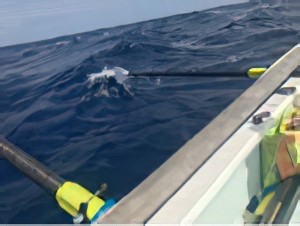
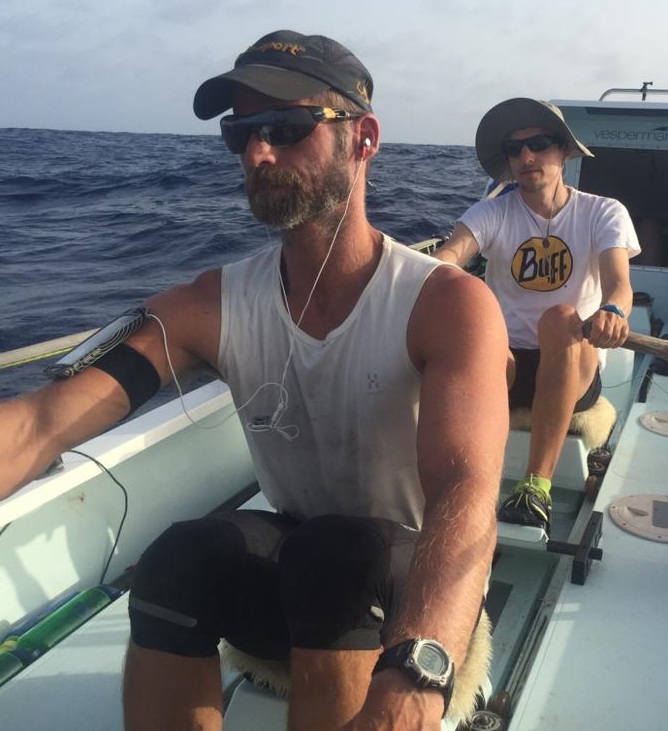
With swells
of up to 3 metres, waves crashing over the side of the boat and the rowers
frequently being swept out of their seats, it has certainly not been an easy
start to the voyage.
Steve himself
has been thrown from his seat countless times, cutting a finger on one
occasion. And to make matters worse that finger then got infected which has
hampered his rowing considerably. But the team have medical supplies on board
and are treating the injury well.
They have
also had to spend long periods on sea anchor to cope with the weather
conditions and that has slowed their progress.
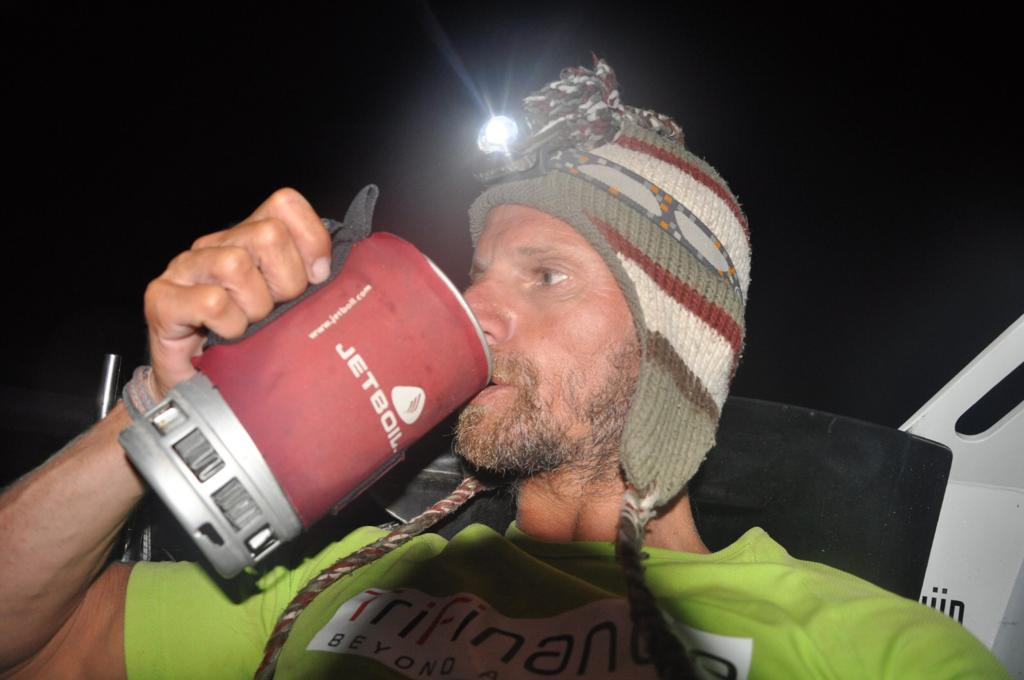
In one of his
updates to home, Steve said he hasn’t been eating much during this first
stretch, making do with energy drinks and chocolate for the most part and
forcing himself to eat proper food on just the odd occasion.
The reality
is that things which are normally simple – sleeping, eating, cleaning your
teeth – become so much more complicated in the confined, turbulent environment
of the boat, so they just don’t happen, Steve explained.
In one
particularly distressing update, he told how the red bucket which the team had
designated as their toilet broke meaning the black bucket, which was originally
intended to be used for showers, has now been promoted to toilet duties.
It’s fair to
assume there isn’t going to be a lot of showering taking place over the coming
weeks…
Despite
everything, however, the team is still making healthy progress and is many
hundreds of kilometres on their way towards South America. A long way to go but
they are well on their way.
Steve is
rowing across the Atlantic Ocean to raise funds for three great organizations.
To find out more and to donate, go to www.crossrower.ch(de.crossrower.chin German)
We’ve now been in Portimao for a week and are more or less ready to go. As I write, we are getting the watermaker ready. It didn’t start up last time, but it’s probably just a set up issue. After that, we are ready. Ideally we would leave at once, but we really need the wind to be blowing in the right direction. The bad news is that the wind is all over the place. There was a window a week away, but that has now firmly shut. I must admit it is very frustrating. I am not well adapted to waiting.The good news is that the winds are constantly changing. This means it’s entirely possible we just up and leave with very little notice at all. In the meantime, we will be training and waiting. The wind may be messed up, but at least the sun is out.
Tight fit
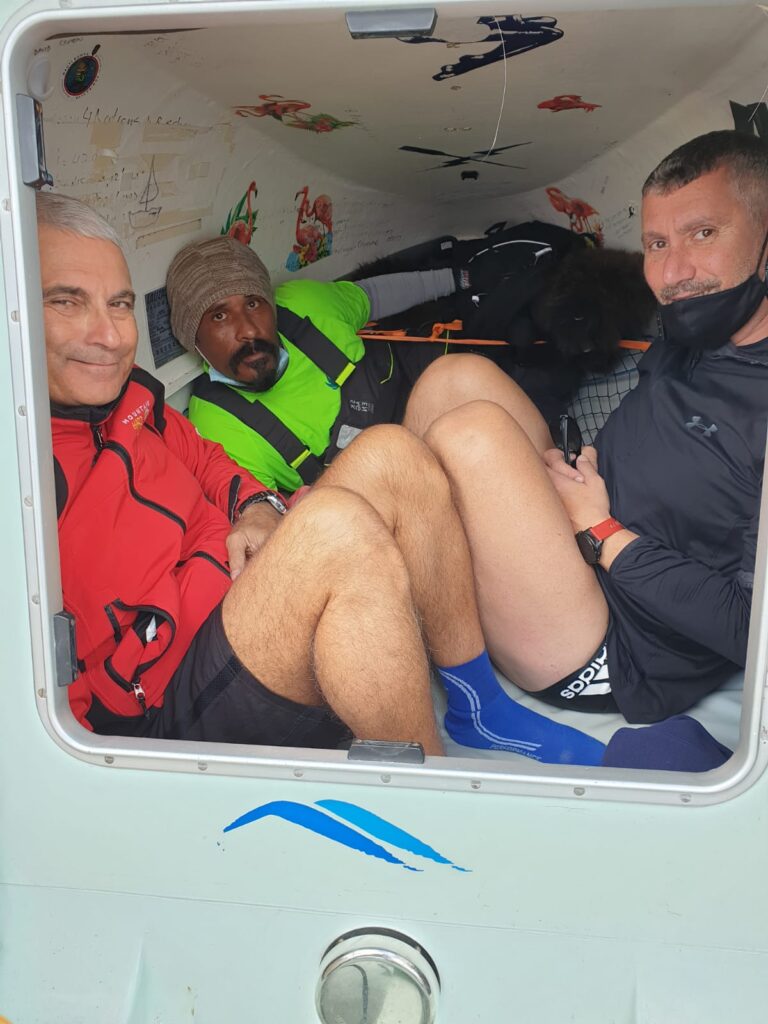
In the event of a storm or very bad weather, three of us
will be confined to the aft cabin. We tested it out the other day and found it
to be a bit of a tight fit. But if we are lucky, this should not happen too
often. Sometimes I will be in the cabin alone, other times it will be two of us
sharing it. This happens on our downtime, which we don’t have huge amounts of.
Having said that, right now I would prefer any sort of tight fit than this
horrendous waiting.
As you read
this, I am on my way to the airport to begin my journey to Portugal from where
I will start my Atlantic rowing adventure.
I’ve been
working on this for so long that I can barely remember what it was like without
having this project in my head.
Today, I’ll meet
my team for the first time. Over the next two months, we will be together every
single moment, confirmed to a very small space, and working towards the same
goal – rowing 6,000km across the Atlantic Ocean.
For two long
years, I trained very hard. Now, all that I’ve learnt will be used to help me
overcome this huge mental and physical challenge.
Here is how you
can follow me:
Website
www.crossrower.ch (or
de.crossrower.ch in German) There will be regular visual and text updates on
the site
Track
me allows you to see where I am. You can find the tracker on the front page on my website.
At the moment, it still has the track form the last row. Ours will be reset
shortly
We’ll
also have regular Facebook updates
(usually a teaser that re-directs to my site)
Donations can
also be done from my website – there are three organizations: Hospice (Malta),
the Swiss Cancer League, and Terre des hommes. I’m at around one-third of my
goal. All the money sent goes to these organizations. The donations will help
me, too, in terms of motivation to row faster.
Determination to
succeed
My aim on the
row is to follow in my brother’s footsteps. When he found out he had a brain
tumor and that it was terminal, he said he would remain positive and fight it
all the way. He did so. I hope I have his courage.
This entire
adventure is dedicate to him for a good reason – he was a good altruistic person,
a fighter with a heart of gold.
I will now face
a big challenge, physically and mentally. It’s a big deal, but it is also one
which I chose to do. Cancer patients and their families don’t have this choice.
That’s the whole
point of this challenge – help the people who are doing their best to make
things as comfortable as possible for cancer patients and their families. That’s
what my brother would have done.
In two months
and a bit, I’ll be back home. I can then return to my normal life. Many cancer
patients and their families don’t have this option.
I am also
collecting money for Terre des hommes. My chosen project is helping Syrian
refugee children in Jordan. I chose to help this organization as I strongly
believe children should have the right to enjoy their childhood. Any help you
can give them is greatly appreciated.
I really can’t believe it, but there’s just one week to go before I
leave home for my Atlantic row.
Two and a half years ago, I started this journey with a mixture of
curiosity and determination. Nothing has changed. Well, nearly nothing.
I’ve trained hard, very hard, completing eight million metres on my
indoor rower, around 400km of on-water rowing, hundreds of kilometres of
running, countless HIIT exercises, and a few more kilometres of cycling. And
weight training – my favourite (sic).
Now, I’m in the taper phase, so I’m not doing more than an hour a day,
maybe two. It’s a lot, but far less than the average of three hours I was doing
every day, six days a week throughout 2020.
My body now needs a small break so I can get on our boat Rose fully fit
and ready to go.
Covid has keep me very busy over the past weeks.
First, I had to cancel plans to fly to Malta as I would have had to
quarantine for 10 days on my return to Switzerland.
Plans to fly to Portugal were also changed because of pandemic
restrictions. We looked for options all round – Seville, Barcelona, Madrid,
Porto – but none offered the certainty of getting there on time.
Now, the team will meet up in the Netherlands on Friday 19 February
(four out of five of us, the other is sailing in to Portimao – how cool is
that!). We will then leave on Saturday evening on a 2,500km road trip through
five countries to Portugal.
That’s a lot to do before a 6,000km row, but it’s also fun and a great
opportunity to get to know the others.
Our week-long prep week in Portugal will also be impossible to complete because
of the restrictions. This means that after prepping the boat, we’ll probably
leave immediately, weather permitting.
This means that we can leave as early as Wednesday 24 February. It also
depends on the weather.
Probably the worst impact of Covid is that family can’t come down to see
us off, and probably neither to welcome us on the other side. It’s unfortunate,
but we’ll manage anyway.
Organizing and preparing for a row across the Atlantic is complicated in
itself – doing it in the middle of a pandemic is something else.
Ever
little bit helps
So
far, we’ve managed to collect just under €3,000 for my Swiss charities (Swiss
Cancer League and Terre des hommes), and around €2,500 for Hospice Malta.
I’m
extremely grateful for the contributions people have made. For all three
organizations, I’m still miles away from my target, so please donate or share
my website address (www.crossrower.ch or
de.crossrower.ch in German) with people. Every single cent goes directly to the
organizations.
You
don’t need to donate huge amounts – smoke less for a few days and donate €10.
Last weekend, I completed what was probably my last 24-hour training row
before I leave on my epic journey. It’s just a month away now.
The training session itself was uneventful. Every time, these sessions get
easier. Not easy, just easier than the time before. The only concern I had was
that my legs, hamstrings to be exact, were in quite a bit of pain.
I think it has something to do with the HIIT (High intensity interval
training) I’m doing, which is why I’ve stopped doing the latter.
Now it’s time for me to balance out my training with appropriate
recovery to make sure my body is in the best possible condition for the row. I
believe I’ve done what I had to do to get physically ready – more than 8
million metres of indoor rowing, another 500km of rowing on water, may
kilometres of running, weights, and HIIT. For a 50-year-old, I guess it’s OK.
I have also started breathing exercises – it’s more to do with my mental
health during the crossing. The exercises help reboot the brain in times of
difficulty (or so they say).
Back to my 24-hour row training – one thing I realised (you have ample
time to think) is that I hate waking up. Who likes it really?. Not only waking
up, getting up (even more difficult).
I calculated that over the course of the crossing, I will have to wake
up (and get up) around 600 times (1,200 hours = 50 days, with a shift pattern
of two hours on, two off). That’s the equivalent of nearly two years of waking
up (and getting up) crammed into less than two months. Crazy, eh?
With one month left to go before leaving, my huge concern now is
Covid-19 and the ability to get to Portugal to begin our trip. Borders are
still open – for now. If they close, we’ll be… well, screwed.
Postponing is a terrible prospect, one which I don’t even want to
contemplate. I’ve worked on this project for 2.5 years and would be devasted if
we have to postpone.
Ever little bit helps
It’s been a year to date since I announced my plans to the world via an
article in The Times.
In this period, we’ve managed to collect just under €3,000 for my Swiss charities (Swiss Cancer League and Terre des hommes), and around €1,200 for Hospice Malta.
I’m extremely grateful for the contributions people have made. For all
three organizations, I’m at around 15% of my target, so please donate or share
my website address (www.crossrower.ch or de.crossrower.ch
in German) with people. Every single cent goes directly to the organizations.
You don’t need to donate huge amounts – skip your coffee and croissant for
one day and donate €10. You know what I mean.
In March 2021, I
will row across the Atlantic Ocean with four others, a grueling 6,000km
challenge that will push mind and body to the limit. Patrice Maciel is
one of the team members of Team EU
This will not be
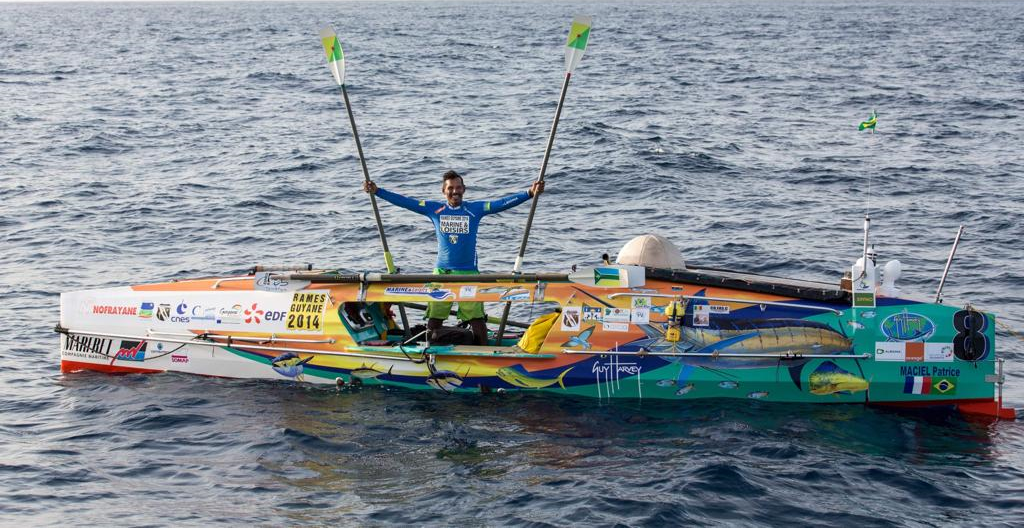
the first rowing experience for Patrice. He has already completed a solo
Atlantic crossing in 2014.
Known locally as
the Guyanese Rower (he is a native of the French Guyana), Patrice is 48 years
old and married with children. He has been involved in sports for all his life,
a passion which is also his profession. He became a sports and football teacher
and works in the public sector in Kourou, where the French space center is
located.
Throughout his
career, he participated in a number of prestigious competitions:
– CON.CA.CAF
(Caribbean and Central African Confederation) with the Geldar football club of
Kourou
– Guyana
Football Champion 2001
– French Surfing
Championship (Skimboard category) 2nd in 1991
– European
Skimboard Champion (Coach of Olivier CHABERT) Champion 2005
– Rames Guyana
Crossing the Atlantic Ocean row from Senegal to Cayenne (capital of French
Guyana) solo in 2014 (82 days)
Personal tragedy
Patrice is particularly
sensitive to the issue of disability in children. His sister Patricia suffered
from mental and physical disabilities, succumbing to her condition.
My parents and I
have gone through extremely difficult times, Patrice says.
With his sister spending
her time in and out of hospital, Patrice is now rowing to collect funds to help
children in need and their families.
It’s also a bit
of an escape from daily life, experiencing life on the ocean during the
crossing.
School education for young people is another area in which he would like to get involved. In overseas regions, particularly in French Guiana, young people are full of resources and talents.
“I wish to
support them through my modest contribution that anything is possible and that
you should never give up your dreams,†he says.
He believes in studying
and being physically active to be successful, plus having a dream and ambitions
in life. For this, he is also supporting the Overseas Youth Association.
Patrice will
also use the platform to raise awareness on environmental protection by highlighting
the state of the ocean and what he observes during the crossing.
I want to make
people aware of the need to preserve our planet, he says.
Motivation
This challenge
is an opportunity for Patrice to live a human experience and participate in one
of the toughest sporting activities in the world. His considerable experience
will be of great help.
The challenge
includes living isolated from the world with his co-rowers, confined in a very
small space without and privacy for many weeks. Rowing day and night, he is
also determined to break the world record from Europe to South America.
“It’s an
experience of life, human relationships and surpassing oneself. I appreciate
the chance to participate in this project, which is in line with my values:
camaraderie, respect, work, solidarity, mutual aid, self-sacrifice, and passion
for sport.â€
The final
destination of Team EU is Kourou, around 60km north of the capital Cayenne. It’s
also Patrice’s home town. And apparently, preparations for a welcome home party
are already in motion.
In March 2021, I
will row across the Atlantic Ocean with four others, a grueling 6,000km
challenge that will push mind and body to the limit. Ralph Tuijn is
leading the rowing trip and Team EU. He has an extensive history of adventure
sports.
The 49-year old
started undertaking longer biking rides around his home country Netherlands and
the surrounding countries in the early 90s.
His first rowing
experience came in 1994 when he participated in a 12-man team crossing of the
North Sea, a feat achieved in 42 hours. That year was also when he climbed his
first mountains, two of the highest peaks in Norway and Mont Blanc in France.
Between 1996 and
1997, he cycled 24,000km through Europe and Asia part from doing a winter bike
trip in the Himalayas at temperatures of -40 degrees Celsius. He followed up a
year later with another 15,600km trip from the Netherlands to Russia.
Ralph (left) with Steve (right)
In 2001, Ralph
completed a solo winter crossing of the Lena river (the longest completely
frozen river in the world) using a specially designed bicycle and polar slide, which
were demolished by the extremely bad ice conditions.
Various bike and
other adventures followed until in 2006 when he rowed across the Atlantic Ocean
together with brother Mike from the Canary Island, La Gomera to Curacao, a
total of 5500 km in 88 days.
A year later, he
went solo and rowed across the Pacific from Callao (Peru) via Atafu and Fiji to
Rabaul (Papua New Guinea), a staggering 19,500 km in 281 days. This is the longest
solo rowing trip in history.
More biking
followed, including the Fairwater Bike Challenge with a world record for
fastest human powered crossing of Africa (Egypt, Sudan, Ethiopia, Kenya,
Tanzania, Zambia, Botswana, Namibia, South Africa), 11,000km.
In 2012, Ralph
rowed across the Indian Ocean from Carnarvon, Australia to the Cocos Islands
(5,300km) in 73 days. He accumulated ore than 13,000 of rowing in various
expeditions over the net years.
In 2015, he
skippered an Atlantic row crossing of a five-person team from Portugal to
Trinidad (6,500km) in 52 days and 10 hours. The team claimed two world records
for fastest crossing from Europe to South America and the first woman on board
to complete this crossing.
Ralph
participated in a summer running expedition through the heart of Australia in
2016, completing 1,500km from Darwin to Alise Springs in 24 days.
In 2017, Ralph
led an Atlantic crossing as skipper of a four-person team from Portugal to
French Guyana (6,000km) in 48 days, 4 hours and 53 minutes with two world
records for fastest crossing from Europe to South America and the youngest
rower on board to complete this crossing.
Another Atlantic
row was done in 2018 from Portugal to Trinidad (6,000km in 65 days, five world
records), and the same route was taken in 2019 (6,000km in 50 days, five world
records). In the same year, he rowed solo from Lanzarote, Canary Islands to
Antiqua (4,700km in 55 days).
In 2020, he
skippered a five-person team from Portugal to Trinidad (6,000km) in 51 days
(five world records, including first blind rower to cross from Europe to S
America).
In total, he has
rowed more than 60,000km across oceans and cycled more than 100,000km around
the world.
In March 2021, I
will row across the Atlantic Ocean with four others, a grueling 6,000km
challenge that will push mind and body to the limit. Georgios Ardavanis is
one of the team members of Team EU
Georgios
was always involved extensively in competitive sports, including track,
basketball, and tennis. While a university student, he was invited in the
Greek Davis Cup squad for trials. In his
early 40s, he became involved in extreme adventures and expeditions.
“I
am not a fan of a conventional ordinary life with some pleasant moments of very
short duration, like an orgasm, and then nothing. I am not looking for the safe
confines of normality. Instead, I am looking for those unique living difficult
moments with pain, which altogether are worth a lifetime of glory. I want to
achieve immortality by adding my name to a handful of achievers’ lists. “
He
said he strongly believes that the ultimate measure of a man is not where he
stands in moments of comfort and convenience, but where he stands at times of
challenge and controversy.
“I
am not doing these extreme expeditions to show how good I am, on the contrary,
I want to show how good I want to be. I want to live a life full of speed,
according to my dreams, expectations, and values that make me happier. I want
to be the best among the best because my soul is unconquerable,” he said
His
past expeditions include climbing rock formations in Greece and Bulgaria
(2005), Nepal (2006), Russia and Mt Kilimanjaro (2007), and Argentina (2008).
Georgios
completed the tough Marathon Des Sables in Sahara Morocco (251 km) in 2008,
only the second Greek participant in the history of that event.
Over
the next few years, Georgios competed in marathons (including back-to-back
marathons in Chicago and Toronto in 2013), triathlons, and ultra-triathlons.
In
2016, he attempted his first ocean rowing challenge, while in 2017, he competed
in a Hellathlon in Greece – 760km of cycling, climbing, running, and cycling
again.
Completing
the rowing challenge in March does not mean Georgios will stop – also this
year, he will attempt to cycle across the US and climb the five Himalaya
summits back-to-back. Next year, he is planning to sail across the Pacific
Ocean in a tall ship. IN 2023, he will cycle the Silk Road from Beijing to
Istanbul followed by the Tour D’ Afrique (Cairo – Cape Town) cycling trip a
year later.
Georgios
holds a BS and MS in Electrical Engineering (Villanova University/USA), MBA
(Rensselaer Polytechnic Institute/USA), PhD in Environmental Engineering
(Technical University of Sofia/BG), and
Advanced Executive Studies in Engineering Management (MIT/USA). Also, he
studied at the National Conservatory of Greece.
He
is a career systems engineer and Technical Director with 30+ years of
international experience in railway systems, and infrastructure projects in the
USA, Germany, Greece, Bulgaria, West Indies, Saudi Arabia, Canada, Oman, Egypt,
Qatar, Dubai, and India. He develops and implements highly complex long-range
engineering projects from conceptual and detailed design to implementation,
installation and test and commissioning in system engineering, integration, and
data analytics covering every phase of engineering, technology, operations,
value chain management, system planning, system migration, critical design gate
reviews per V-cycle, quality engineering, system assurance.
In March 2021, I
will row across the Atlantic Ocean with four others, a grueling 6,000km
challenge that will push mind and body to the limit. Dolores Desclaveliere is
one of the team members of Team EU
Dolores is a row
instructor and is passionate about sports and the outdoors, and she challenges herself
to go that little bit further.
“I appreciate
the notion of surpassing oneself and competition, whether it applies to rowing
or to the mountains,†she said. “I devote time to my two passions: rowing and
mountain sports, including mountaineering, downhill and cross-country skiing,
great climbing and canyoning routes.â€
Th March 2021
crossing will be her second attempt to row across the Atlantic – the first in
2016 ended in a tragic accident, but she is eager to renew the adventure and
take on an incredible challenge, both physically and mentally.
She aims to
share her experiences with the younger generation: a partnership has been set
up with students from three different middle schools (Paris region and
Chamonix) and with a high school (social mediation project).
Apart from the
Atlantic row challenge in March, she aims to conquer the Cholatse ascent (6,400
m Nepal) and will take on another Atlantic rowing challenge in November this
year with a continent to continent trip in a mixed-double boat.
Dolores is an
independent IT infrastructure consultant. She supports her clients in their IT
transition and transformation projects.
The countdown to
my Atlantic Challenge has now begun in earnest, with less than seven weeks to
go before departure.
Preparations in
the final weeks are well under way with a considerable amount of administrative
work, putting together equipment and necessities, and loads of training left to
be done.
I will leave for
Portimao in Portugal and meet up with the rest of the team around February 22.
We will there hold training sessions, safety drills, and conduct all the necessary
tests to ensure that crew and boat are ready for the expected two months at
sea.
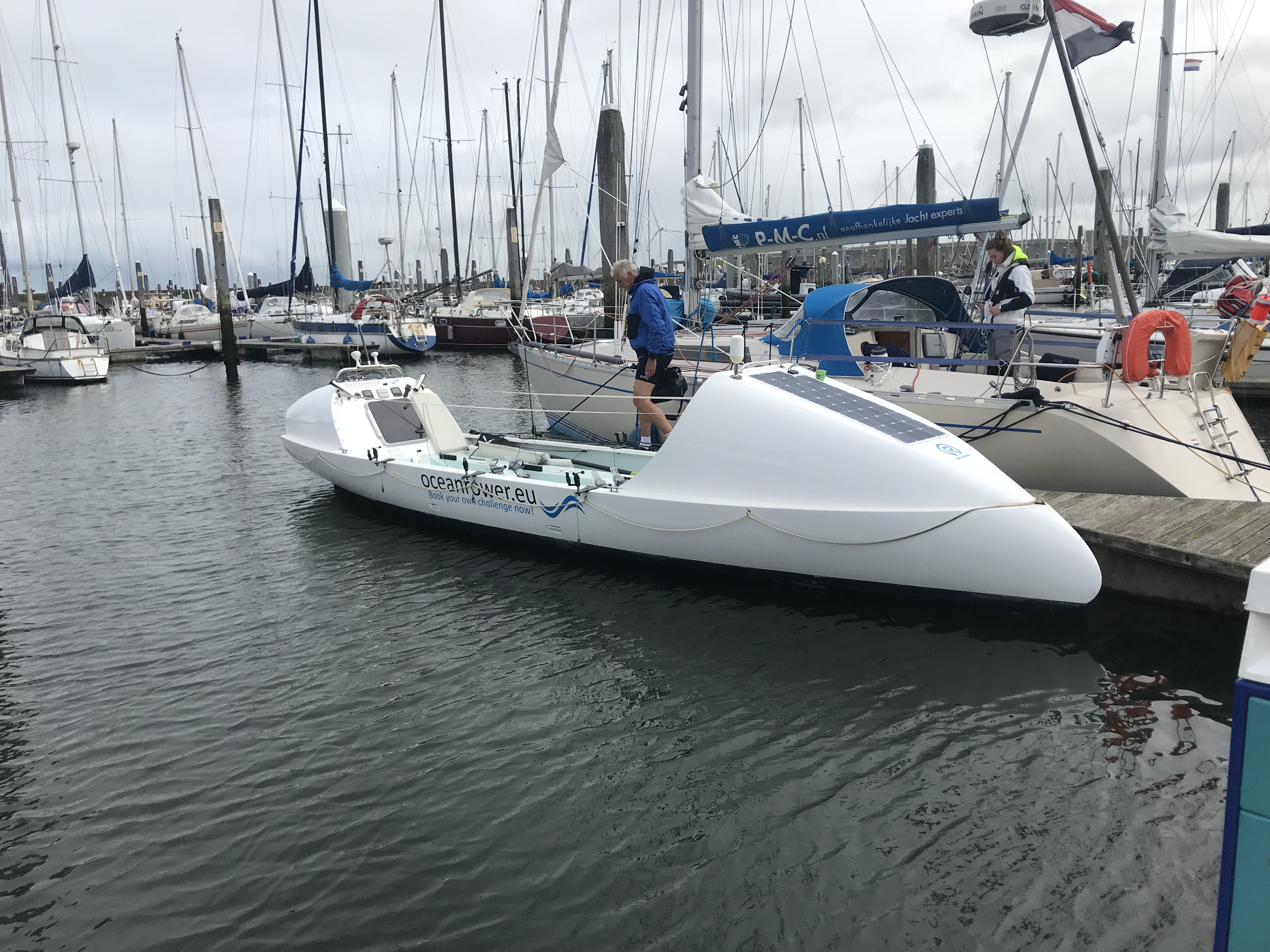
We will be
crossing in Rose, a Rannoch 45 ocean going row boat that is considered among
the best in its class.
It will be back
to basics for the duration of the trip, with the 9m x 1.7m boat playing home to
five adults.
Getting to the
start line will take quite a bit of work. Apart from organizing travel and
accommodation, I need to get a long list of things done. The personal things I
need is long and there is not a great deal of allowance for bags.
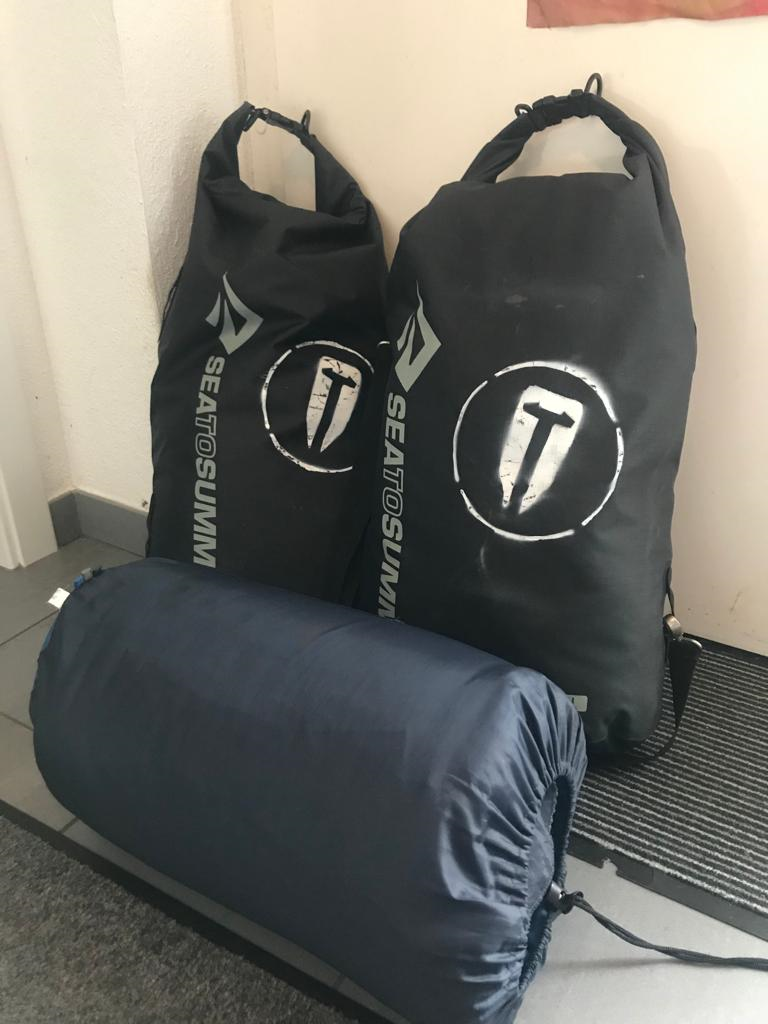
The list
includes clothing, including bad weather gear, creams, vitamins, water flasks
and spoons, shoes, towels, medicines, caps, suntan lotion, washing gel, dry
bags, sleeping bags, and much more.
I also need to
get audio books, music, and kindle books ordered, and make sure I have an MP3
player for the last days (Spotify stops working if offline for more than 30
days). The list is endless.
As I’m
collecting money for three charities, I have extensive work to do to make sure I
can regularly update followers with the aim of boosting fundraising. Until now,
I’ve collected around 10% of my CHF30,000 target.
At the beginning
of February, I will be going back to Malta to do press interviews and
participate in a nationwide all-channels telethon that is also collecting funds
for one of my charities. One week after returning to Switzerland, I leave for
the row.
Then there is
the training. Covid-19 restrictions have hampered on-water training, so a great
deal of work was done on the rowing machine at home. Over the past two years, I
have done around 8 million meters. Apart from that, there have been another few
hundred – I estimate around 300km – on water.
I dislike weight
training, but have maintained a regular weekly session lifting weights. I
probably should have done more, but hindsight is 20/20 vision. I’m running far
less than I would have liked to do with rowing taking up the majority of my
training time.
Now, I’m also
planning to do a month of High Intensity Interval training (HIIT) to strengthen
my core, and my plan is to do some more time on the water.
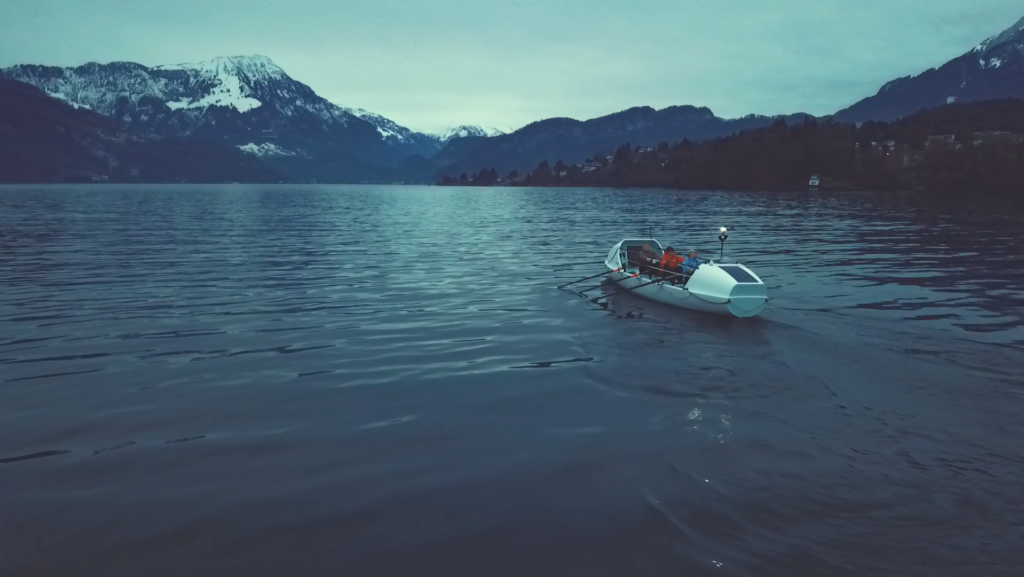
Training on Lake Lucerne with the Swiss Raw team
I was also lucky
over the past months in that I was able to train with the Swiss Raw boys –
training on a Rannoch 45 is by far the best thing that I could have done.
The training
also included time in the cabin. While outside was fine all the time, I
instantly felt slightly sick inside the cabin – I guess my first days on the
ocean will not be fun.
Meeting my team
will be very important – I believe the chemistry between us will be fundamental
to crossing the ocean in the fastest time possible. We are still hoping to
break the world record of 48 days 4 hours for the Trade 2 route.
In total, we
will take around 800,000 strokes from Portimao to Kourou in the French Guiana.
We will work on a two hours rowing, two hours off, day and night for the trip. In
this time, we will consume around 6,000 calories a day and still end up losing
around 10kg.
Despite the two
years of intensive training, I am still beginning to feel anxious about the
trip.
Failure is not
an option – I can’t decide to abandon the project half way through. And I have
no intention of doing so.
This is why I
have been preparing myself mentally for this challenge in the best way possible.
I am working on changing my mindset from one where arriving at the destination
is the goal to one where the journey itself is an integral part of my target.
It’s not ‘finish as quickly as possible’ but rather ‘work hard to get there
quickly while enjoying the trip’. I have also started breathing exercises aimed
at increasing my focus and concentration in difficult times.
I have also asked
my three daughters and wife to write letters to me which I can turn to in times
of crisis – I’m planning on returning home with the envelopes closed.
Go to www.crossrower.ch /
de.crossrower.ch to find out more and donate to Steve’s charities